

🚀 TL;DR
GenAI applications don’t just rely on LLMs, they need a solid database infrastructure to work effectively. While vector databases power semantic search, they’re just one piece of the puzzle. A well-architected GenAI system needs multiple database types to handle different kinds of context: conversation history, user data, and domain-specific knowledge.
The Problem: Why Context Matters in GenAI
GenAI models like GPT-4 and Claude don’t think—they predict the most probable next token based on the context they receive. If the context is weak, the output is generic. If the context is strong, the output feels intelligent.
So, where does this context come from?
There are three key types of context GenAI apps must manage:
1️⃣ Conversational Context – Keeping track of chat history, previous responses, and user interactions.
2️⃣ Situational Context – Information about the user, such as preferences, past purchases, or business-specific data.
3️⃣ Semantic Context – Domain-specific knowledge retrieved based on meaning, not just keywords.
Each of these requires different database technologies to store, retrieve, and process data efficiently.
The Reality: Vector Databases Alone Won’t Cut It
Many assume that vector databases (like FAISS, Milvus, or Pinecone) are all you need for GenAI applications. They’re great for semantic search—finding relevant information based on conceptual similarity rather than exact keyword matches.
But they’re not designed to handle:
🔹 Chat history and user sessions (stored in key-value or document databases)
🔹 Structured user data and transactions (best managed in relational databases)
🔹 Large-scale historical and analytical data (stored in data lakehouses)
The best-performing GenAI applications use a multi-database approach.
How GenAI Actually Uses Databases
A well-designed GenAI system involves multiple steps, each interacting with different databases:
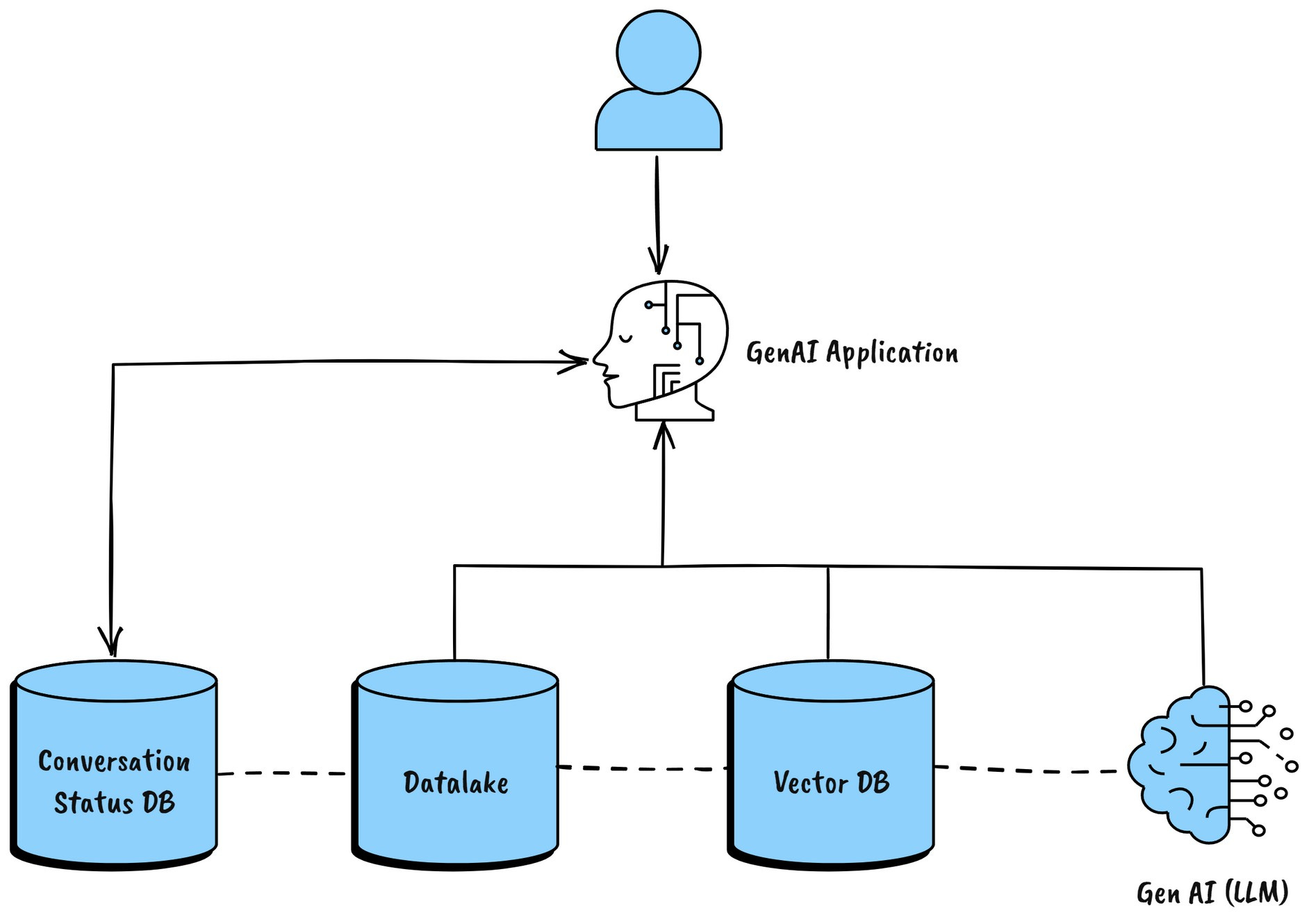
Like this diagram? It was created with ease using SketchWow. Click this link. SAVE an extra 10%!
🔹 GenAI Application Workflow
1️⃣ User Query – The user sends a question or request.
2️⃣ Conversation Context Retrieval – Fetch past chat history from Redis (key-value store) or MongoDB (document database).
3️⃣ Situational Context Retrieval – Load user preferences, purchase history, or organizational data from PostgreSQL (relational DB) or Apache Hudi (data lakehouse).
4️⃣ Query Embedding Generation – Convert the query into a vector representation.
5️⃣ Semantic Search – Find relevant documents in Milvus or FAISS (vector database).
6️⃣ LLM Processing – The LLM generates a response based on the combined context.
7️⃣ Response Delivery – The final output is sent to the user.
8️⃣ Context Update – The chat history is updated for future interactions.
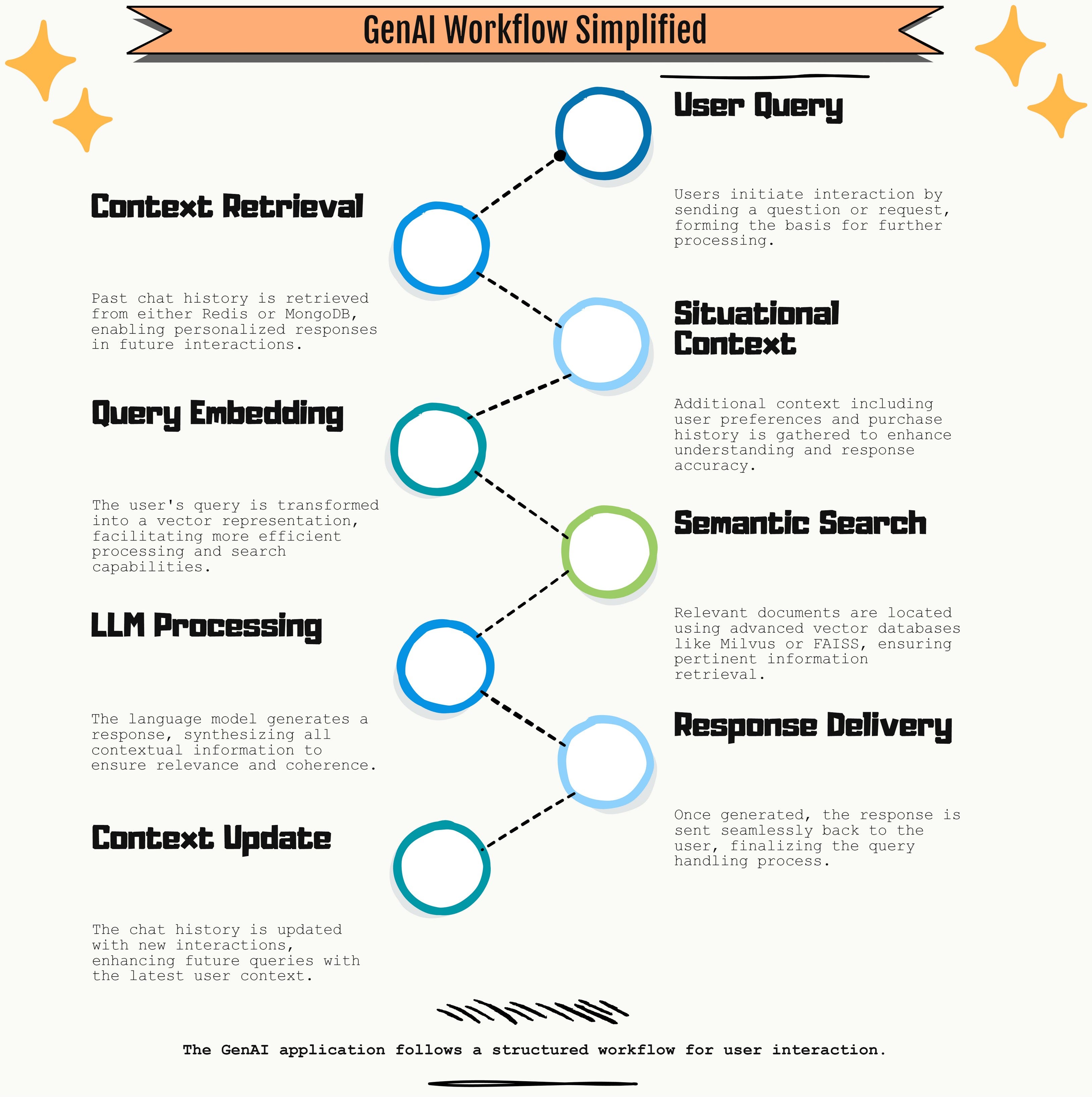
Like this diagram? It was created with ease using SketchWow. Click this link. SAVE an extra 10%!
Every step relies on a different database. Treating vector databases as a one-size-fits-all solution leads to weak context management and poor responses.
Case Study: E-Commerce Product Recommendations
Imagine a customer searches for “comfortable running shoes.”
🔹 A traditional search might fail if the product descriptions don’t include the word "comfortable."
🔹 A vector database helps by matching semantic meaning—finding shoes with “soft cushioning” or “ergonomic support.”
🔹 But what if the user has a history of buying minimalist running shoes? That data lives in a relational database and should influence recommendations.
🔹 What if they asked a similar question last week? That chat history should come from a document store.
By combining vector search, past interactions, and user preferences, you improve recommendation accuracy—which isn’t possible with just a vector database.
